When something sticks: opening a ticket
Three checks, then the ticket
A doubt, a value that looks wrong, a message you never received: you will get an answer. There is no silly question, and there is no question too small.
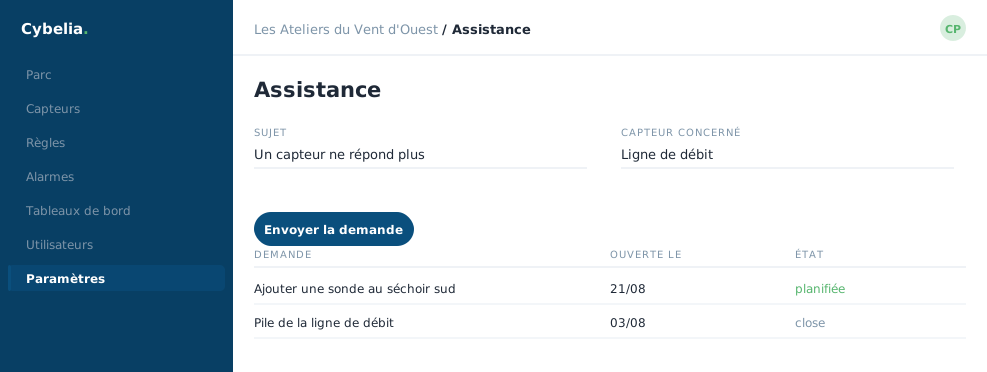 A ticket goes out with the sensor attached: nothing to retype.
Three reflexes before calling
They settle a good half of cases in under a minute. One: look at the time of the last reading on the estate, if it is fresh, the sensor is fine and the question lies elsewhere. Two: if several sensors on the same site go quiet together, it is the gateway or the network, not the sensors. Three: if emails are not reaching you, check the address in your account, and the junk folder.
What to tell us
The sensor's name as it appears on screen, not "the one at the back". The date and time of what you saw. And what you expected instead. "Kiln 2 has been showing 8% since Tuesday 2 pm, when we normally run at 12%" is a perfect report: it fits on one line and it is enough to work with.
A screenshot is worth three paragraphs. On a phone as on a computer it takes two seconds and clears up most misunderstandings.
Opening a ticket means writing down what you see. You have no diagnosis to make and no technical term to use. Describing what surprises you is enough: working out which it is, is our job.
What happens next
An acknowledgement, then a reply saying what was found and what was done. If a site visit is needed, a sensor to replace, a battery, a gateway to plug back in, we agree a slot with you. Nothing happens at your premises without your knowing.
One last word
The best time to ask a question is when everything is fine. "Am I told if the kiln drifts overnight?" can be checked in five minutes on a quiet Tuesday. On a Friday evening, in front of a damaged batch, it is too late to ask the question, but it is never too late to call.
In closing
There is no such thing as too small a question. Three checks settle half the cases, and for the other half, the sensor's name and the time are enough to put us on the trail.
Commenting is not enabled on this course.