What Cybelia Cloud installs at your premises
What arrives at your premises
You have nothing to fit, nothing to configure, nothing to wire. Here is what arrives at your premises all the same, because a tool is easier to trust when you know what it is made of.
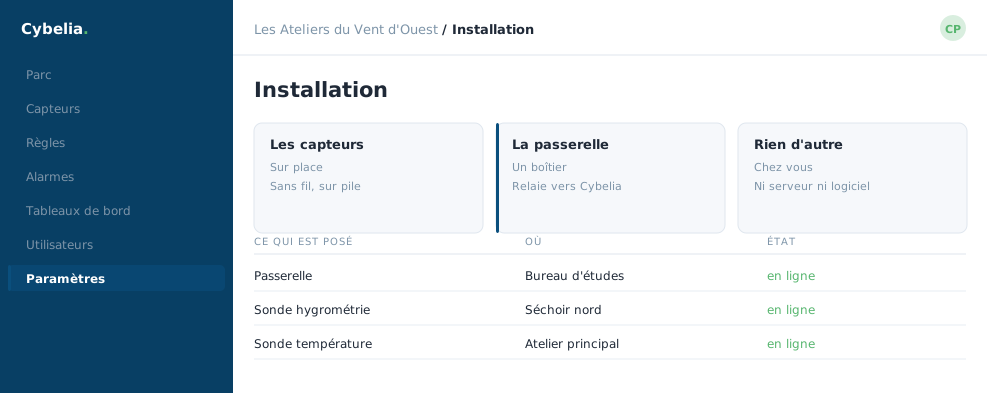 What Cybelia Cloud installs on site, and what it asks of your network.
The sensors
Small boxes, most of them about the size of a pack of cards. They are fixed to a wall, to a machine, or inside an enclosure. They do not need mains power: most run on a battery.
Some are wired all the same: an electricity meter goes in the distribution board, around a machine's cable, and reads it without cutting anything. A run/stop contact goes on the extraction's motor starter. Those fittings are done by an electrician, usually during a planned shutdown.
The gateway
A single unobtrusive box, plugged into a socket and into your network. It collects readings from the sensors around it and sends them to Cybelia Cloud.
It only ever goes out: it behaves like a web browser fetching a page. Nobody can come in through it from outside, and there is no setting to change on your internet router or your firewall.
Placement, which changes everything
A thermometer above a radiator measures the radiator. A humidity probe pressed against the kiln wall measures the wall. So the technician spends a while choosing the spot with you: at head height, away from draughts, lamps and vent outlets, and where the reading genuinely stands for the thing you care about.
A badly placed sensor gives correct figures and false information. That is the one real trap in this trade, and it is the one the installer helps you avoid. Tell them what you want to watch, not where you want them to drill.
How long it takes
A first installation on a site fits into half a day: the gateway, the first sensors, a check that readings really are arriving, and choosing the names with you. Sensors added later take a few minutes each.
In closing
You have nothing to fit or wire up, but knowing what the installation consists of helps you understand what you read on screen, and answer when a colleague asks what that little box is.
Commenting is not enabled on this course.