Your online hosting, properly set up
"Cloud posture" page
If part of your IT is hosted online, most incidents there come not from a clever attack but from a forgotten setting: a storage space left open to the public, a backup never switched on, an account without two-step verification.
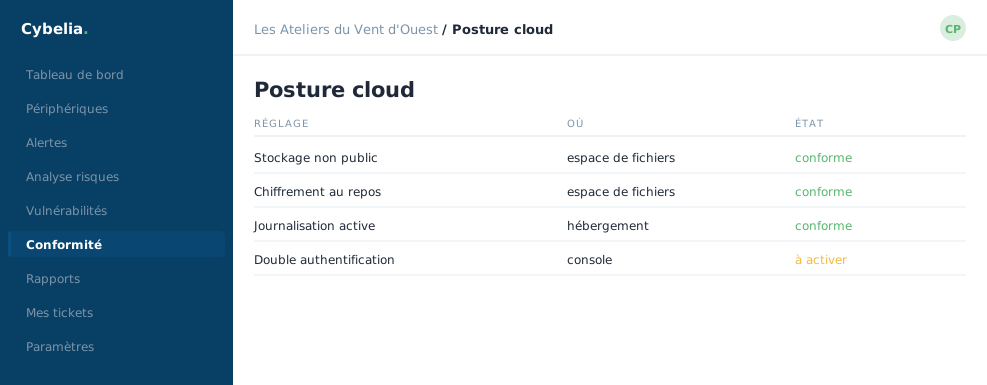 Your online hosting, setting by setting: three compliant, one to switch on.
What the page does
The Scan now button reviews your settings and produces a list of findings. Each line gives the rule code, its title, the resource concerned, the severity, the date, and, most important, the remediation: the sentence that says what to do.
That remediation column is what sets this page apart from a plain audit report. You are not left facing a problem: you are given the action.
Three possible follow-ups
Mark resolved once the setting has been corrected. Acknowledge when the finding is known and accepted, sometimes a "non-compliant" setting is exactly what you need. Or do nothing, if it is not a priority: the line stays open and waits.
A list of findings is not a list of open holes. They are gaps against an ideal, sorted from most to least important. You deal with them at the company's own pace, starting at the top.
Does this concern me?
Only if you have services hosted online. Otherwise the page shows a message explaining that a connection is needed, and you can ignore it without consequence: your overall score does not suffer.
At Les Ateliers, only one service is involved, the space where drawings shared with customers are stored. Two medium findings were corrected there last month; the list has been empty since.
In closing
In the cloud, incidents rarely come from a clever attack: they come from a forgotten setting. A storage space left open to the public takes two minutes to fix, provided you know it is open.
Commenting is not enabled on this course.