What it reads in order to answer
Four ingredients, for every question
When you send a message, your AI starts neither from nothing nor from everything. It assembles four materials for each question. Knowing which ones explains most of its answers, including the disappointing ones.
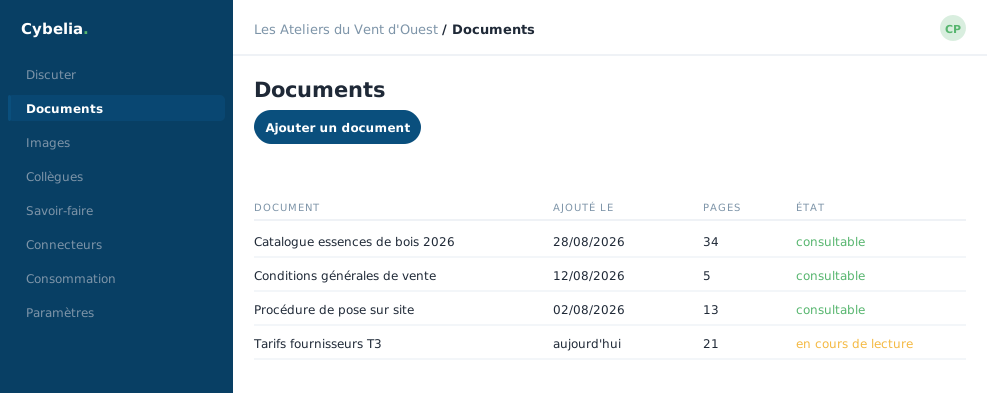 The documents the assistant has read: this is where its answers come from.
1. Your corpus
The documents filed by your company, cut into passages and indexed. For each question, the passages closest to the subject are retrieved and placed before it. That is where the sources it cites come from. A document that was never filed does not exist for it: this is the number one cause of a disappointing answer, and it takes a minute to fix.
2. Its memory
The lasting facts it has retained from your exchanges: your habits, your contacts, your decisions. It carries them from one thread to the next. The scope is individual, what it remembers about you does not travel to your colleagues.
3. Lent skills
Knowledge bases maintained by Cybelia Cloud, which your company switches on or leaves off: methods, reference material, good practice.
4. What arrives on its own
Connectors plugged into your websites, shares and repositories feed the corpus without anyone uploading a file.
Why it sometimes says it doesn't know. Because it is asked to. When the retrieved passages don't answer, it says so rather than inventing something believable. An AI that never says "I don't know" does not know any more: it is hiding it.
What it never reads
Another company's conversations. Documents in a space you have no right to. A colleague's image library. This is not a setting anyone could loosen: it is the database that refuses, and it refuses before the question is even asked.
In closing
A disappointing answer is nearly always explained by one of these four ingredients: a missing document, a closed space, an over-long conversation. Knowing which one tells you what to fix.
Commenting is not enabled on this course.