Asking well : the workshop, before and after
Four requests, before and after
The previous lesson gives the rules. This one tests them on four real requests from Les Ateliers du Vent d'Ouest. Read the left-hand column: you have probably written it already.
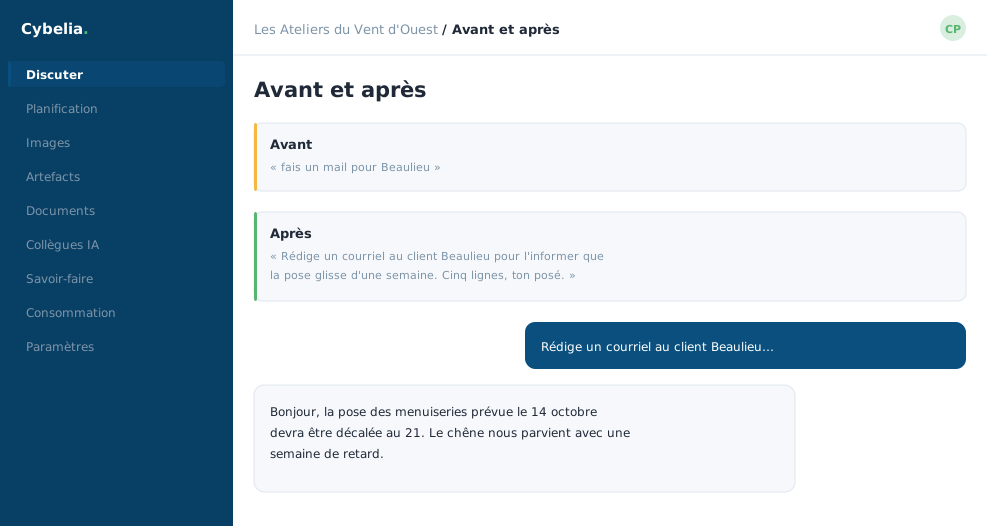 The same request, before and after: the difference fits in two lines.
| What we write on instinct | What actually works |
|---|---|
| "The Marchand quote" | "Take the Marchand quote and tell me in three bullets what changed compared with the March version, so I can check it before sending it." |
| "Write a payment reminder" | "Write a courteous reminder for a €2,400 invoice, 21 days overdue, first reminder, long-standing customer. Firm but friendly tone, ten lines maximum." |
| "How does our holiday allowance work?" | "What does our company agreement say about summer leave? Quote me the clause." |
| "Summarise all this" (with 6 files attached) | "Here are the 6 site reports. Give me a table: date, site, blocking issue, decision taken." |
What the right-hand column has extra
Nothing clever. It says for whom, in what shape, and how far. Three details you already have in mind as you type: you simply have to write them down instead of keeping them.
A good request gets reused. Farida keeps the three reminder wordings that work. She finds them again through Search in chats, changes the amount and the name, and off she goes. That is not laziness: it is craftsmanship, and it deserves to be written down.
The reflex that saves you: "where did you get that?"
Camille makes it a rule for anything going out to a customer. Five words to type. If the answer quotes the contract, she signs. If the answer apologises and rewords without quoting, she knows the document is not in the corpus, and she puts it in. Either way, she has won.
What you do not ask it
To decide for you. An AI can draft a reply, compare two clauses, work out a variance. It does not take responsibility for sending. You are the one who signs, and that is exactly as it should be.
In closing
The left column is the one we all write instinctively; the right one takes ten seconds longer and saves a quarter of an hour. Reread these four examples next time an answer disappoints you.
Commenting is not enabled on this course.