Checking what commits you : the habit to keep
The lesson you re-read in six months
Your AI gets things wrong. Not often, not crudely, but it does, and usually with confidence, because a false sentence and a true one are written the same way. This is the one thing from this course to keep even if you forget everything else.
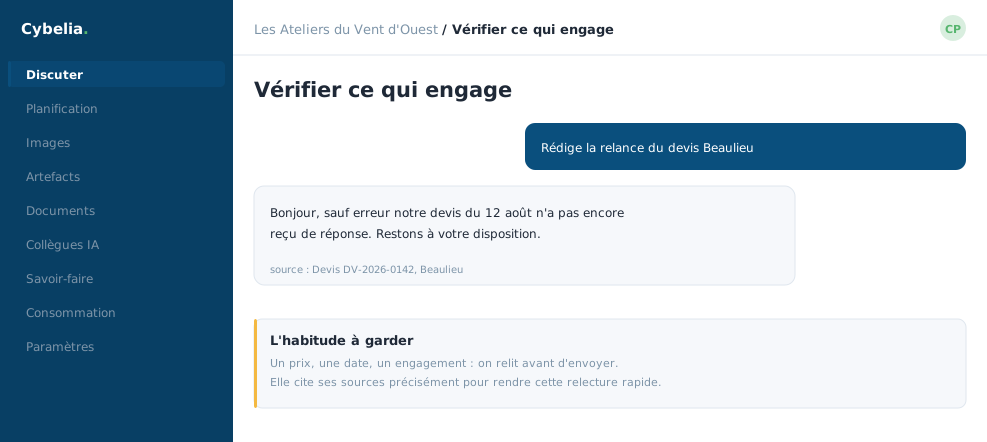 It cites its source precisely: that is what makes review quick.
Three questions, in this order
- Does this commit anyone? A price, a date, a lead time, an obligation, a figure that will go to a customer or to the authorities.
- Where did it get that? Open the cited source. If it cites none, it is reasoning, not reading.
- Does the source really say that? This is the step people skip, and it is the one that catches errors.
| Case | Checking |
|---|---|
| Summarising an internal conversation | A quick read. |
| Finding a supplier again | A glance at the source. |
| A price in a quotation | Source opened, figure recomputed. |
| A lead time promised in writing | Source opened, and someone confirms. |
| An answer to the authorities | Re-read by a competent person, always. |
This is not distrust, it is craft. You do proofread a colleague's quotation before sending it. Your AI works fast and never tires: that is precisely why it produces more things to proofread, not fewer.
What the product does for you
It cites its sources, it does not fill gaps by inventing, and it writes nothing into your records without a human hand. Those three guardrails reduce the risk; they do not remove it. The final read-through stays yours, and that is exactly as it should be.
In closing
If you were to remember one thing from this course, it would be this: check what commits you. A figure, a date, a clause, an amount, all of it is reread in the source before it goes out. The rest is comfort; this is the rule.
Commenting is not enabled on this course.