Workshop : the machines it can read
The /machines page
The Workshop is what your AI is allowed to go and look at in the real world: a server, a controller, a machine tool, a box sitting on a production line. A connector pours in documents to be read later; a machine answers now, and its answer is stale within the minute.
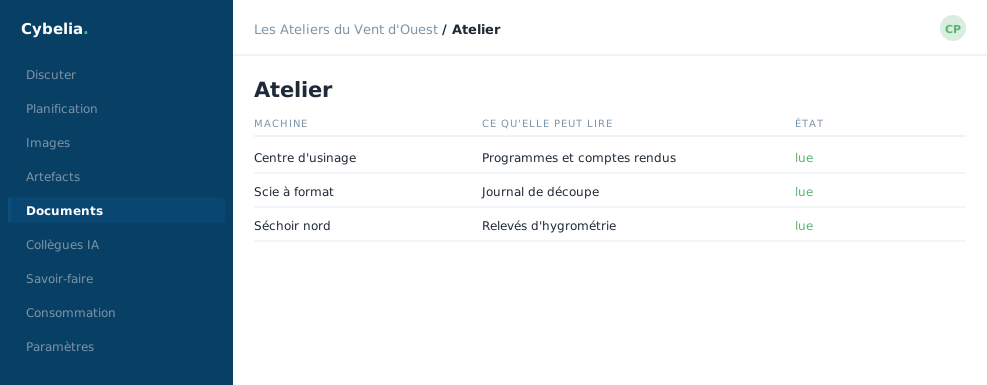 Three machines whose logs it reads unaided.
Three ways to talk to it
- A remote command run on a machine, and its output. That is the door to servers.
- The industrial controller protocol used by machine tools. You read a measurement point there: a temperature, a part counter, a valve state.
- A small box wired to the machine, which Cybelia Cloud queries over the network. No cable runs from our servers.
The rule that carries everything else
The agent never composes the command. On each machine's record you declare a list of readings: a name, what it is, and the instruction to run. The agent can only name one of them. It does not even see the instruction written behind it: it sees that a temperature can be read, not how it is read.
This is deliberately tedious to fill in. A field where the agent wrote its own command would be full access to your machines for anyone who managed to slip the right sentence into an indexed document.
Controlling: two locks, and you need both
Reading changes nothing. Acting does. Control is therefore a switch, per machine, closed by default. Open, it does not mean the machine will move on its own:
- the switch is re-read at the moment of acting, close it at 2 p.m. and nothing goes out at 2:01;
- and your approval is still required: a proposed action waits among the pending entries.
Nothing moves in the workshop without a person having agreed to it. The possible actions are also declared in advance, one by one, with their names.
Testing, and knowing when
The Test button asks the machine whether it answers, and records the date and the verdict. It is always a read, never an action, even when control is open. Without that date, "the agent finds nothing" and "the machine is switched off" look far too similar.
In closing
A connector deposits documents, a machine answers now. The difference matters on the day the question is about what is happening on a production line this very moment.
Commenting is not enabled on this course.