Your first month : where to start
A plan, not a wish list
A company AI is not rolled out, it settles in, one use at a time. Here is what the Ateliers du Vent d'Ouest did, in order, and what worked.
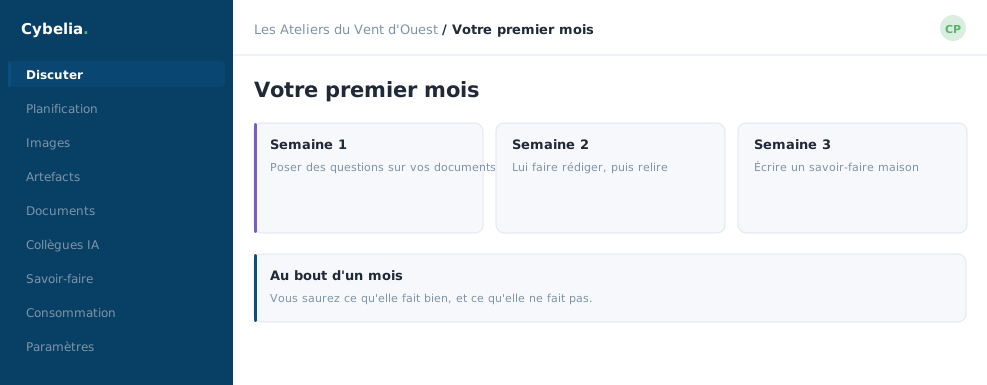 Three weeks, three steps: and what you will know by the end.
Week 1, sign in, and fit a lock
Everyone signs in, chooses their password, sets their second factor and fills in their position. Nothing else. A company where everyone gets in properly on the first Monday is halfway there.
Week 2, file little, and file well
Not the whole shared drive. Eight to thirteen documents people genuinely look for: the pricing terms, two technical sheets, the internal rules, the latest meeting notes. Filed in the right space from day one, because a misfiled document is noticed far too late.
Week 3, ask real questions
Everyone brings three questions from their own day and asks them following the "Asking well" lesson. Write down the ones that fail: those are the ones pointing at a missing document or a badly framed question.
Week 4, look at what happened
Camille opens the consumption page, Farida re-reads the artefacts she kept, Yanis declares the first machine to read. Only then do you decide whether you need a connector or an AI colleague.
The mass-upload trap. Filing fifteen thousand documents in week one does not make your AI wiser: it drowns the good answers among old versions. A corpus is pruned, not poured.
And Tom, the apprentice
He turned out to be the best indicator: the questions he got no answer to were exactly the ones whose knowledge lived in the old hands' heads and nowhere else. That is the most lasting thing this course leaves you, not a tool, but a map of what your company had never written down.
In closing
A business AI is not rolled out, it settles in through successive uses. Four weeks, four steps, and by the end nobody wonders what it is for any more: it just gets used.
Commenting is not enabled on this course.