Why this portal exists
The problem before
A company using an ERP always ends up wanting to change it: one more field on the customer record, a clearer workshop screen, a discount rule. The risk is not the idea, it is where you try it out. Trying it straight on the database that issues invoices means playing with everyone's work.
 Three databases for one trade: the one that works, the one for trying things, the one you keep.
The opposite habit is just as costly: out of caution, nothing is ever touched. The software freezes, drifts away from the trade, and people work around it with spreadsheets.
What Forge brings: a place where mistakes cost nothing. You work on a copy of your ERP. You try, you look, you start again. When it is right, you request the go-live, and only then is your real database touched.
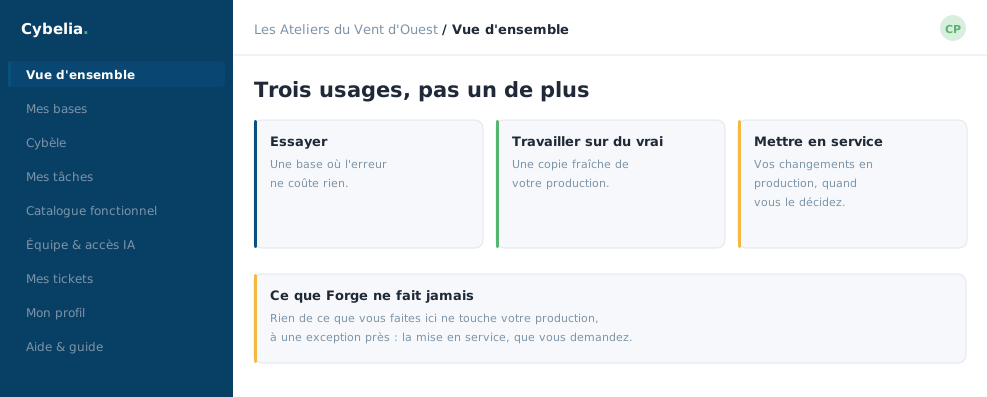
Three uses, no more
Forge exists to create test databases, to pull down a fresh copy of your production so you can work on realistic data, and to put your changes live once they have been checked.
At Les Ateliers du Vent d'Ouest, Camille wanted a "timber species" field on quotes. Yanis tried it for a week on a test database, Farida reviewed it, and the go-live took a few minutes one Tuesday morning. Production was never exposed to an experiment.
What you cannot break
Nothing you do in Forge changes your production, with a single exception: the go-live, which you request explicitly and which first checks a list of conditions. Everything else happens in copies.
In closing
Between freezing everything out of caution and experimenting on the database that invoices, there is a third way: somewhere to get it wrong without consequence. That is all Forge is, and that is why it exists.
Commenting is not enabled on this course.